
Japanese Tea
Three teas, one plant.
Matcha, hojicha and sencha all come from the same leaf. What separates them is shade, steam, roast and time.
抹茶 · Matcha
The leaf you drink
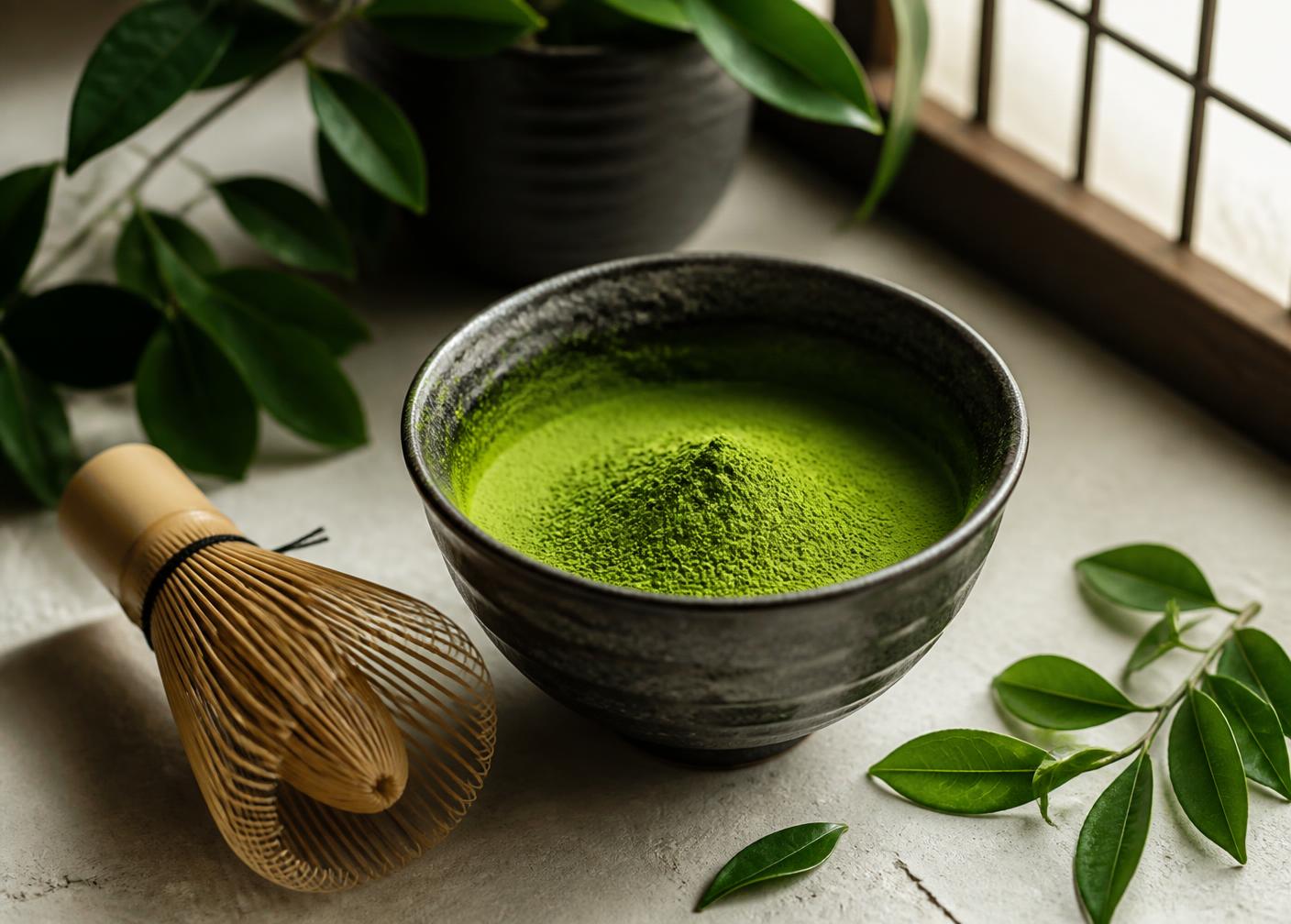
Matcha begins in shaded gardens. Covering the plants before harvest slows growth, deepens colour and softens astringency, producing leaves with a rounder, sweeter character.
Those leaves are steamed, dried, de-stemmed and slowly stone-milled into a powder fine enough to suspend in water. Whisked rather than steeped, matcha is the one Japanese tea where the leaf is consumed entirely.

ほうじ茶 · Hojicha
Transformed by fire
Hojicha is green tea roasted over heat until the leaf turns from green to reddish brown. The technique is said to have begun in Kyoto in the 1920s, when merchants roasted surplus leaf and stems rather than waste them.
Roasting reduces astringency and creates warm, toasted, nutty notes. In Japan it is poured freely — with meals, for children, and late in the evening.

煎茶 · Sencha
The tea of every day
Sencha accounts for most of the tea drunk in Japan. Leaves are steamed shortly after picking — the Japanese method that fixes their fresh green character — then rolled into fine needles and dried.
The result is bright, clean and quenching: a tea designed less for occasion than for repetition.
Tea Ceremony
What the tea room teaches
Chanoyu — the way of tea — is less a recipe than a discipline of attention. The room is small, the utensils are few, the movements are practised, and the purpose is to serve someone else well. Four ideas from that tradition sit behind everything we make.
一期一会
Ichigo ichie
One meeting, one moment. The idea that a gathering happens only once, and deserves full attention.
おもてなし
Omotenashi
Hospitality offered without expectation — anticipating a guest's needs before they are spoken.
旬
Shun
Seasonality. The first tea of the year, the tea suited to heat, the tea suited to cold.
侘寂
Wabi-sabi
Beauty found in simplicity, restraint and the marks of use rather than in perfection.